
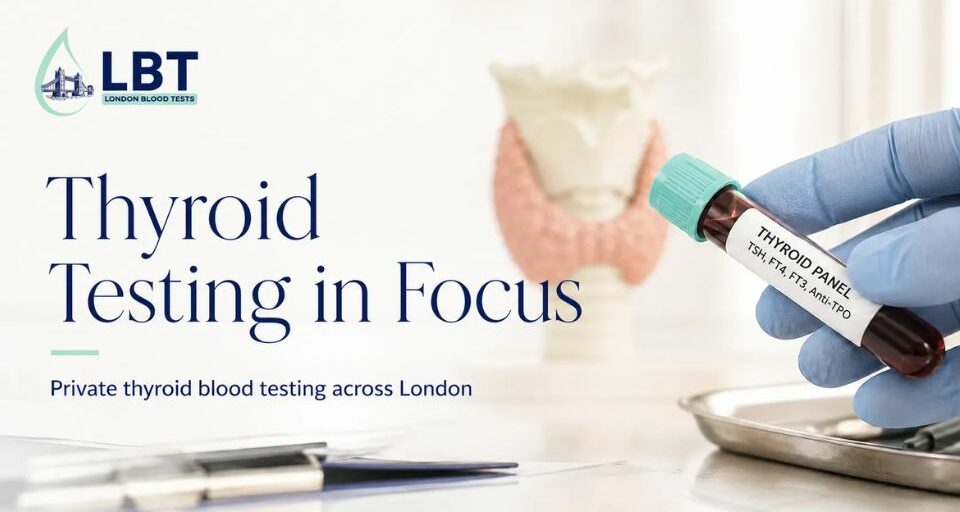
Persistent tiredness, changes in weight, hair thinning, difficulty concentrating and sensitivity to temperature are symptoms many people experience at some point. While they can have numerous causes, they can also occur when the thyroid gland is not functioning normally.
London Blood Tests is highlighting the importance of looking at symptoms in context and using appropriate laboratory testing where thyroid dysfunction is suspected.
The thyroid is a small gland in the neck that produces hormones involved in regulating metabolism and a wide range of bodily functions. Both an underactive thyroid and an overactive thyroid can produce symptoms that overlap with other health concerns.
For example, the NHS lists fatigue, weight changes and hair changes among the possible symptoms associated with thyroid dysfunction, although these symptoms are not specific to thyroid disease.
This overlap is one reason why symptoms alone cannot determine whether the thyroid is responsible.
“Someone who feels exhausted, notices changes in their hair or is struggling with unexplained changes in weight may understandably start looking for a cause,” said Gabriela Brewer, Founder of London Blood Tests.
“But there are many possible explanations for these symptoms. Blood testing provides objective information that can help establish whether thyroid function is one of the areas that needs further attention.”
Looking Beyond a Single Thyroid Marker
Thyroid Stimulating Hormone, or TSH, is commonly used when thyroid dysfunction is being investigated. NICE recommends TSH as an initial test for many adults where pituitary disease is not suspected, with Free T4 and Free T3 measured in particular circumstances depending on the TSH result.
The tests appropriate for an individual depend on their circumstances, and a larger panel is not necessarily required for everyone. For people who choose private testing and want several thyroid-related markers measured together, London Blood Tests offers a Thyroid Full Profile covering six thyroid-related biomarkers.
The profile includes:
- Thyroid Stimulating Hormone (TSH)
- Free T3
- Free T4
- Thyroxine (T4)
- Thyroid Peroxidase Antibodies (TPOAb)
- Anti-Thyroglobulin Antibodies (TgAb)
The commercial profile combines several thyroid hormone measurements with two thyroid antibody measurements. The clinical relevance of individual markers will depend on the person’s circumstances.
Thyroid antibodies can provide additional information in certain clinical circumstances. NICE, for example, recommends considering TPO antibody measurement in adults whose TSH is above the reference range when investigating the underlying cause of hypothyroidism.
Private Thyroid Testing Across London
London Blood Tests provides private blood testing in London through multiple collection locations across the capital, allowing patients to choose a convenient location rather than relying on one central clinic.
Mobile phlebotomy can also be arranged for patients who prefer to have their blood sample collected at home or another suitable location.
The company advises patients not to interpret an individual abnormal marker in isolation. An abnormal result does not necessarily mean someone has thyroid disease, and laboratory results should be considered alongside symptoms, medical history, medicines and other relevant clinical information.
Patients who would like medical support following their results can also arrange a private GP consultation for further discussion.
“Private testing can give people direct access to information about their health, but the purpose should always be to obtain meaningful laboratory data rather than simply ordering as many tests as possible,” Brewer added.
“Choosing the appropriate profile and understanding what the results mean is much more valuable.”
People experiencing persistent, unexplained or concerning symptoms should seek appropriate medical advice rather than relying on private blood testing alone.