
UK healthcare AI company DYAD, whose technology turns unstructured healthcare data into structured patient context and onward actions, has raised $10 million to accelerate its expansion across the NHS and into new markets.
The Series A, led by Sangha Capital with participation from existing investors closed in April 2026, and was backed by a syndicate of technology investors including Bill Tai and Carbide Ventures.
DYAD is targeting one of healthcare’s biggest coordination challenges: longform unstructured data that requires human effort to both create and decode. Its Primary Care product called BetterLetter services over 200 practices and focuses on the £300m annual burden of unstructured data transfer between Secondary Care and Primary Care.
DYAD will use the new investment to accelerate the rollout of its technology across UK primary care whilst also applying its proprietary AI technology to secondary care and mental health services both in the NHS and internationally, where progress notes, referrals and care planning create similar clinical inefficiencies.
Alexander Tayler, CEO of DYAD, said:
“Some of the most important patient information is still trapped in documents that existing systems cannot properly integrate, creating an unnecessary administrative burden for healthcare teams.
“More than 200 GP surgeries are now using our technology, benefitting from a purpose built world model for clinical coding and agentic platform for healthcare administration.
“This investment will allow us to accelerate that growth and take our technology into other parts of healthcare.”
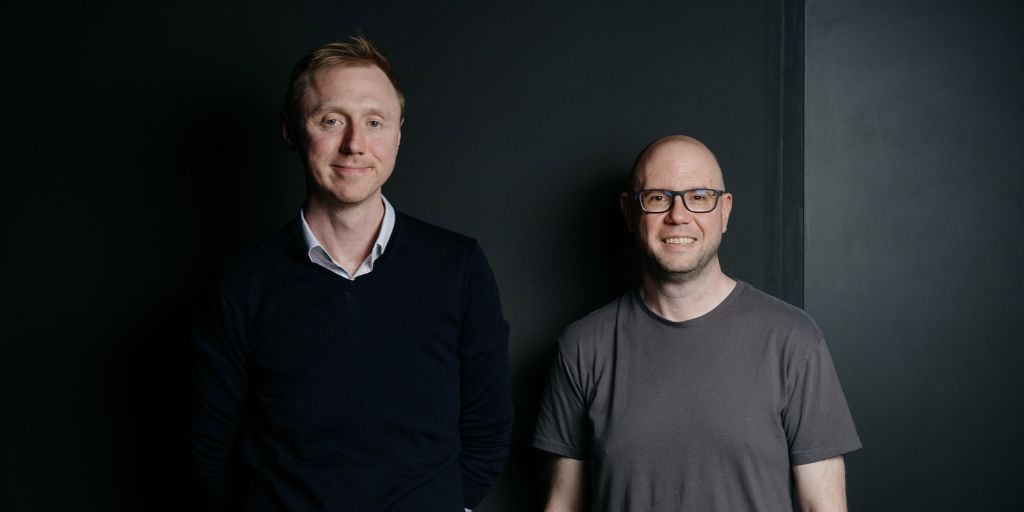
DYAD was founded six years ago by Dr Alexander Tayler and Dr Steven Hamblin to improve the way clinical information is transferred and understood across healthcare systems. Its proprietary AI system, GENIE, turns information contained within unstructured clinical documents into structured data that can be incorporated into patient records and tasks for agentic systems to action. In primary care, GENIE powers BetterLetter, DYAD’s AI-powered clinical coding platform, which has processed more than five million clinical documents to date. Every suggestion is reviewed and approved by a member of the practice team before it reaches the patient record. DYAD also retains its own clinical coding team to ensure the product learns from real interactions and solves specific problems when integrated into real-world workflows.
Unlike solutions built primarily around large language models, GENIE uses a multi-stage approach known as Graph Enabled Information Extraction. NLP identifies medical entities and aligns them with the appropriate clinical coding taxonomy, while knowledge graphs apply defined clinical rules and logic. LLMs are used at the final stage to resolve semantic ambiguity.
This purpose-built approach is designed to help people code and action clinical correspondence more efficiently, whilst also improving the quality and depth of coding done.
Carolina Casas Forga at Sangha Capital, said:
“DYAD is tackling a fundamental problem facing healthcare systems, vast amounts of valuable clinical information remain locked inside unstructured documents.
“The company has demonstrated both the strength of its technology and clear demand within primary care. We see a significant opportunity to build on that foundation and apply DYAD’s technology across the wider healthcare system.”
Following the Series A, DYAD plans to increase the reach of BetterLetter across UK general practice while piloting applications of its underlying GENIE technology within secondary care and mental health services, both within UK secondary care and more broadly across the Middle East and United States.
The company sees primary care as the starting point for a wider ambition to improve the handover of clinical information between healthcare organisations and make patient data more accessible and usable across the entire healthcare system.