
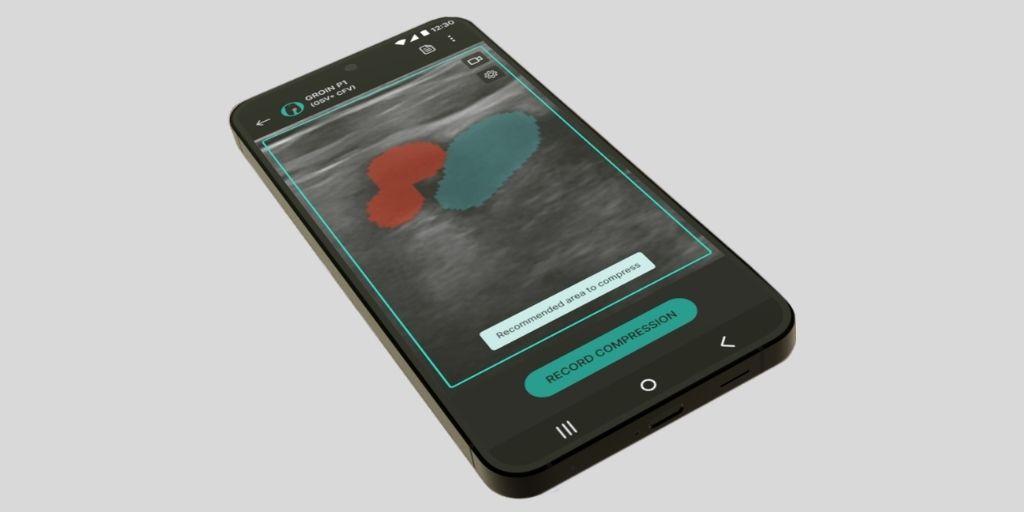
Chelsea and Westminster Hospital has demonstrated how artificial intelligence can speed up the diagnosis of deep vein thrombosis (DVT), a blood clot that usually develops in a deep vein in the leg. During a three-month pilot, most patients received a clinical decision following their first appointment, with the typical time from starting a scan to receiving a clinical decision taking less than 30 minutes.
The hospital has piloted innovative technology for blood clot detection that combines a handheld ultrasound device with real-time artificial intelligence (AI). The technology enables clinicians
Developed by ThinkSono, the technology guides clinicians
During the three-month pilot,
Fewer than 20% of patients required a follow-up departmental ultrasound after their ThinkSono scan.
DVT is a potentially serious condition caused by blood clots forming in deep veins and affects around one in every 1,000 adults each year. It can lead to life-threatening complications including pulmonary embolism. Diagnosis typically relies on ultrasound imaging performed by specialist sonographers, creating delays for patients and additional pressure on diagnostic services.
This initiative was funded by CW+, the official charity of Chelsea and Westminster Hospital NHS Foundation Trust, and delivered through CW Innovation, the Trust’s joint innovation programme with CW+. Conducted in Same Day Emergency Care (SDEC) at Chelsea and Westminster Hospital, it examined ThinkSono Guidance,
Within four weeks of introducing the new AI-supported pathway, the number of patients receiving a scan report within the NICE-recommended four-hour timeframe had risen from 18% to 51%.
Following the successful evaluation, the Trust is exploring opportunities to expand the use of the technology, supporting faster diagnosis and improved patient experience.
The innovation was highlighted in Chelsea and Westminster Hospital NHS Foundation Trust’s recent Outstanding Care Quality Commission (CQC) report,
Dr Jonathan Downing, Consultant Acute Physician and Service Lead for Same Day Emergency Care at Chelsea and Westminster Hospital NHS Foundation Trust, said:
“This is a fundamental change in how we manage suspected lower-limb DVT.
“Instead of waiting hours, and sometimes overnight, for access to ultrasound imaging, clinicians can begin the diagnostic process immediately and provide most patients with an answer in less than 30 minutes.
“For patients, that means faster reassurance when DVT has been ruled out and quicker access to treatment when a clot is identified.”
The evaluation also
Chris Chaney, Chief Executive at CW+, said:
“CW+ funded this work because we believed it could address a real challenge for patients and frontline NHS teams.
“Through CW Innovation, we help clinicians test promising technologies in real-world healthcare settings. These results demonstrate the potential of AI-enabled diagnostics to improve patient experience and support more efficient models of care across the NHS.”
Fouad Al-Noor, CEO and Co-Founder of ThinkSono, said:
“Chelsea and Westminster Hospital NHS Foundation Trust is recognised nationally as a leader in healthcare innovation, and we are proud to have worked with the Trust and CW+ on this pioneering evaluation.
“We developed ThinkSono Guidance to remove bottlenecks from the DVT pathway and help patients receive answers faster. The results demonstrate the real-world impact AI can have when it is deployed to solve a genuine clinical challenge, improving access to diagnostics while supporting frontline clinicians.”