
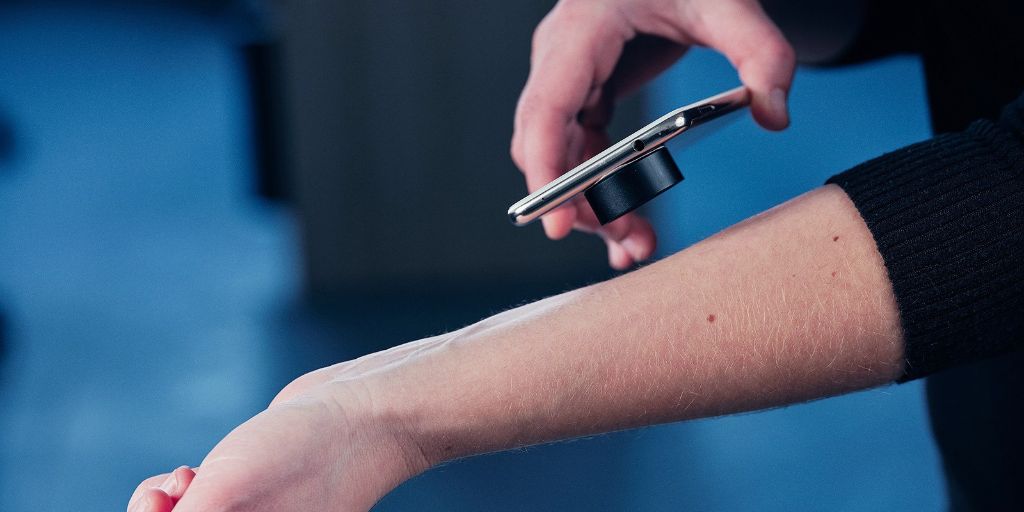
(ALT: Melanoma self-screening with a computer-vision mobile application)
The average person has several dozen moles on their skin. These are benign skin growths and therefore pose no threat in most cases. However, in rare instances, moles can develop into melanoma or another type of malignant tumor. Changes in a mole’s appearance can be warning signs.
GP2U Telehealth, an Australian telehealth provider, developed an app that uses computer vision to help users assess their risk of melanoma.
Integra Sources contributed to the project as a contract development partner specializing in embedded electronics and software. The team helped the client port the application from Python to C++ and integrate the new code into an iOS-compatible version. The developers also improved the computer vision algorithms used by the application, increasing their reported accuracy from 30% to 80% during development.
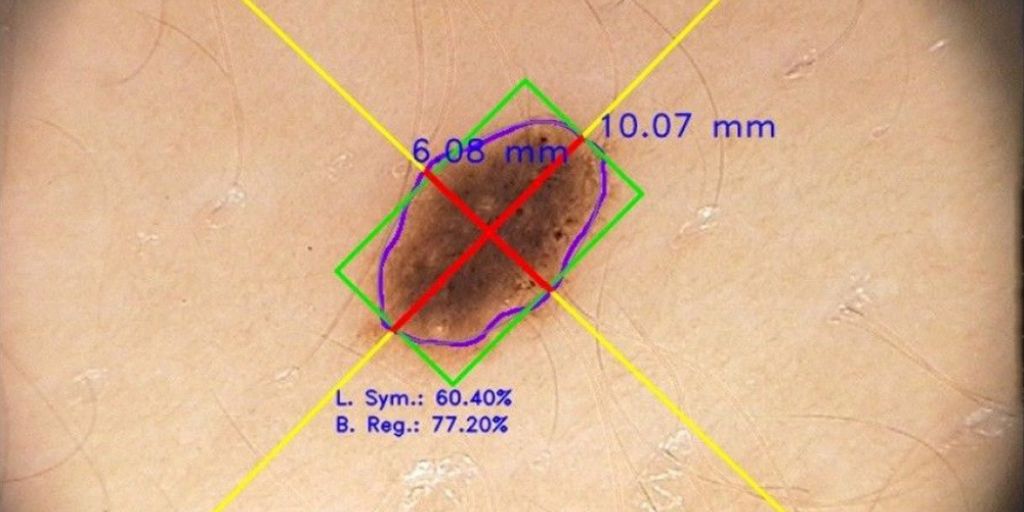
(ALT: Computer vision analysis of a mole)
How the App Works
Users install the app on their smartphones, attach a special lens to the device, and take a picture of the skin area they want to examine. Then OpenCV-based computer vision algorithms process the image.
The software identifies the mole’s boundaries and assesses potential warning signs using the ABCDE rule, which healthcare professionals use to recognize possible signs of melanoma:
- Asymmetry: A harmless mole is generally symmetrical, while an irregular shape may be cause for concern.
- Border: A benign nevus typically has smooth, well-defined edges, whereas poorly defined or irregular borders may indicate a potential problem.
- Color: A typical mole has a uniform color. Patches of a different color or variations in pigmentation may be warning signs.
- Diameter: Melanomas are often larger than 6 mm across, although they can be smaller.
- Evolution: A benign nevus typically remains stable. Changes in its shape, diameter, or color should prompt a visit to a doctor.
A malignant lesion may also cause pain, itching, or a burning sensation.
To help the app accurately detect mole boundaries, the development team implemented several image-processing algorithms and techniques:
- Color balancing
- Unsharp masking
- Sharpening filter
- Gamma correction for processing the subchannels of the source image
- Automatic brightness and contrast adjustment with optional histogram clipping
- White balance correction
- Custom k-means clustering with a predefined set of colors
The software also removes hair, vignetting, and glare from images. These enhancements helped increase the algorithm’s reported accuracy to 80% during development. The team also reduced image processing time to less than 0.1 seconds.
After analyzing an image, the app displays an estimated risk of skin cancer or another malignancy. It also allows users to send images classified as high-risk to a specialist for a more detailed examination.
Project Results
The solution turns an ordinary smartphone into a digital dermatoscope when used with a compatible lens. Users can capture and analyse images of suspicious moles at home, although professional medical assessment remains essential.
While the developers reported improvements in algorithm accuracy, only a qualified physician can make a final diagnosis. The app is intended as a preliminary assessment tool and should not replace professional medical advice. Users should consult a healthcare professional about suspicious or changing moles, regardless of the app’s results.
The development team reduced image processing time from 4–6 seconds to less than 0.1 seconds, while improving reported algorithm accuracy from 30% to 80% during development.
Medical Disclaimer: This article is for informational purposes only and does not constitute medical advice. Smartphone-based skin analysis applications should not be used as a substitute for professional medical examination, screening or diagnosis. Anyone concerned about a new, changing or suspicious skin lesion should consult a qualified healthcare professional, regardless of any result generated by an application.